
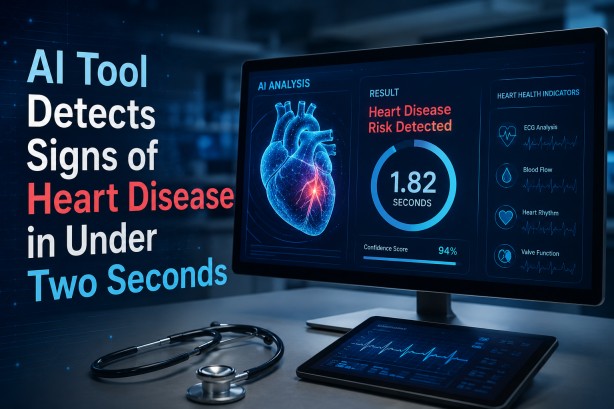
An innovative artificial intelligence tool has been developed by doctors to swiftly analyze routine electrocardiograms (ECGs) and identify patients at a high risk of heart failure and heart valve disease in under two seconds. This cutting-edge technology was trained on millions of ECGs, enabling it to detect subtle patterns that might elude doctors during a standard ECG assessment.
In a comprehensive trial involving 67,000 patients across the United States, the AI demonstrated impressive accuracy, identifying up to 81% of individuals with heart failure and up to 90% of those with heart valve disease. These results highlight the potential of AI to enhance the diagnostic process for heart-related conditions.
ECGs are among the most frequently conducted medical tests, with around one billion performed globally each year. Yet, when heart disease is suspected, patients often face lengthy wait times for echocardiograms. The new AI tool aims to address this issue by helping doctors pinpoint high-risk patients who would benefit from prioritized echocardiograms and additional testing, thus enabling earlier treatment interventions.
The AI’s capabilities extend beyond direct diagnosis, as researchers anticipate its future use in analyzing ECGs conducted for unrelated medical reasons. This could lead to the early detection of previously unnoticed heart conditions. Additionally, the research team is considering the development of portable AI-powered ECG devices for use by healthcare professionals, with the goal of making early detection more rapid and accessible.