
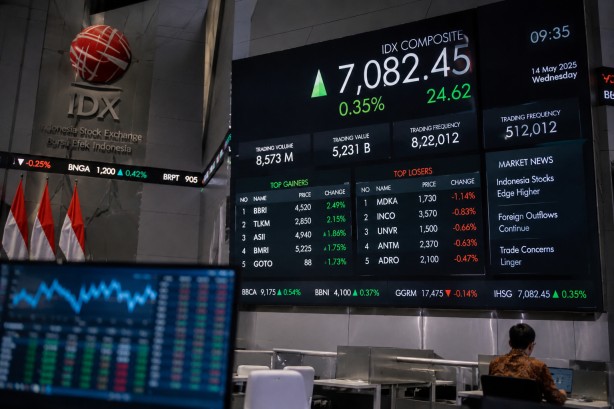
The Jakarta Composite Index (JCI) experienced a rise of 0.34% during the week leading up to July 24, despite ongoing foreign investor withdrawals and increasing global economic uncertainties. This uplift in Indonesia’s benchmark index was buoyed by intensified trading activities. Notably, the market capitalization of the Indonesia Stock Exchange climbed to Rp 10,870 trillion, while the average daily trading turnover saw a significant boost, jumping 41% to reach Rp 19.76 trillion.
Nevertheless, foreign investors continued to exhibit caution, remaining net sellers with total outflows amounting to Rp 79.09 trillion for the year. This trend underscores a persistent wariness regarding Indonesian assets amid a volatile global economic climate. Contributing to the cautious sentiment were rising global oil prices, which have been driven by escalating tensions in the Middle East.
Adding to the economic pressures were fresh tariffs imposed by the United States on imports from several of its trading partners. Among these measures was a 10% tariff targeting specific Indonesian goods, further complicating the trading landscape and weighing on market confidence.
In response to these developments, Indonesia’s Finance Ministry acknowledged the potential impact of higher oil prices on the nation’s budget for 2026. Despite this challenge, officials maintain that Indonesia’s overall fiscal position remains robust, signaling confidence in the country’s economic management amidst external pressures.