
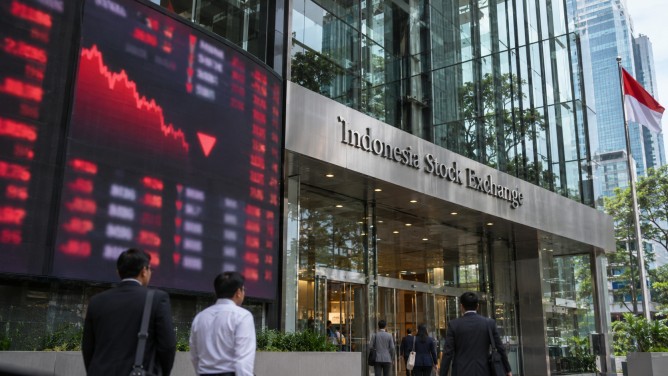
Indonesia’s stock market experienced a significant decline on Tuesday, with the Jakarta Composite Index (JCI) dropping by 3.78% to 4,904 points. This downturn was primarily driven by substantial foreign investor sell-offs and apprehensions linked to the upcoming MSCI index review.
The market’s decline was broad, with 624 stocks falling while only 57 advanced and 37 remained unchanged. The trading volume for the day reached 27.15 billion shares, with transactions totaling Rp 11.72 trillion (around $645 million). Foreign investors played a key role in the market’s downward pressure, with net sales amounting to Rp 831.5 billion during the first trading session.
Investors are particularly anxious about the MSCI Index Review scheduled for November 11–12, which could alter the inclusion and weighting of Indonesian stocks in global investment indexes. The unease among market participants is compounded by an upcoming meeting of Indonesia’s Financial System Stability Committee, which is expected to address issues such as stock market volatility, the weakening rupiah, and overall financial stability.
Adding to the negative market sentiment are domestic economic concerns. October saw an uptick in food inflation, rising to 5.81% from 5.03% in September, largely due to supply disruptions caused by El Niño-related weather conditions. Simultaneously, core inflation decreased to 2.56% from 2.84%, highlighting potential weaknesses in household spending, particularly among lower- and middle-income consumers.
Regional market instability and uncertainties surrounding global technology investments further dampened investor confidence. In particular, rising costs associated with artificial intelligence development and uncertain returns have resulted in selling pressure across several Asian markets.