
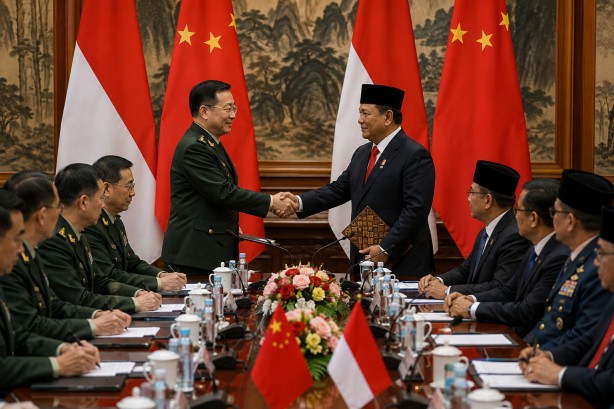
The recent convening of the second China-Indonesia Joint Foreign and Defense Ministerial Dialogue, commonly referred to as the 2+2 mechanism, signifies a significant advancement in the political and security ties between the two nations. This strategic dialogue is designed to enhance regular communication and broaden collaborative efforts across various domains, including defense, technology, maritime security, cybersecurity, and crisis management.
For Indonesia, this partnership presents an opportunity to advance its defense modernization efforts and bolster its industrial and technological capacities. Discussions have explored potential collaborations in defense manufacturing, technology transfer, and the acquisition of military equipment. This engagement allows Indonesia to diversify its international partnerships while maintaining its strategic autonomy, focusing on developing domestic capabilities rather than becoming overly reliant on any single foreign partner.
Maritime cooperation emerges as another crucial area of focus, given the ongoing need to navigate differing interests and regional issues. Establishing regular channels of communication between the two countries could mitigate misunderstandings and contribute to greater regional stability. As both nations play pivotal roles in the political, economic, and security dynamics of Southeast Asia, the China-Indonesia 2+2 mechanism may have broader implications for the entire region.
The success of this dialogue will ultimately hinge on the ability to translate agreements into tangible progress in enhancing defense capabilities, fostering industrial development, coordinating maritime activities, and bolstering regional security. The outcome of these efforts could reshape the Southeast Asian landscape, underscoring the significance of the China-Indonesia partnership in addressing contemporary challenges and future opportunities.